
Recent public statements by Alberto Núñez Feijóo, leader of Spain's main opposition party, the Partido Popular (PP), have ignited widespread debate across the immigrant and expatriate community in Spain. Feijóo announced his party's definitive commitment to create a brand-new, standalone Spanish Nationality Law (Nueva Ley de Nacionalidad) designed to significantly tighten requirements for acquiring Spanish citizenship and a European passport.
Framed under the political slogan *"A passport is not given away as a gift; it must be earned"*, the proposal reflects a broader European conservative trend toward hardening immigration and integration policies. This detailed legal briefing by CrossWorld deconstructs the political proposal, assesses its real-world legislative viability, and outlines the urgent procedural recommendations for eligible foreign residents.
!Spain New Nationality Law Proposal by Partido Popular - Spanish Congress
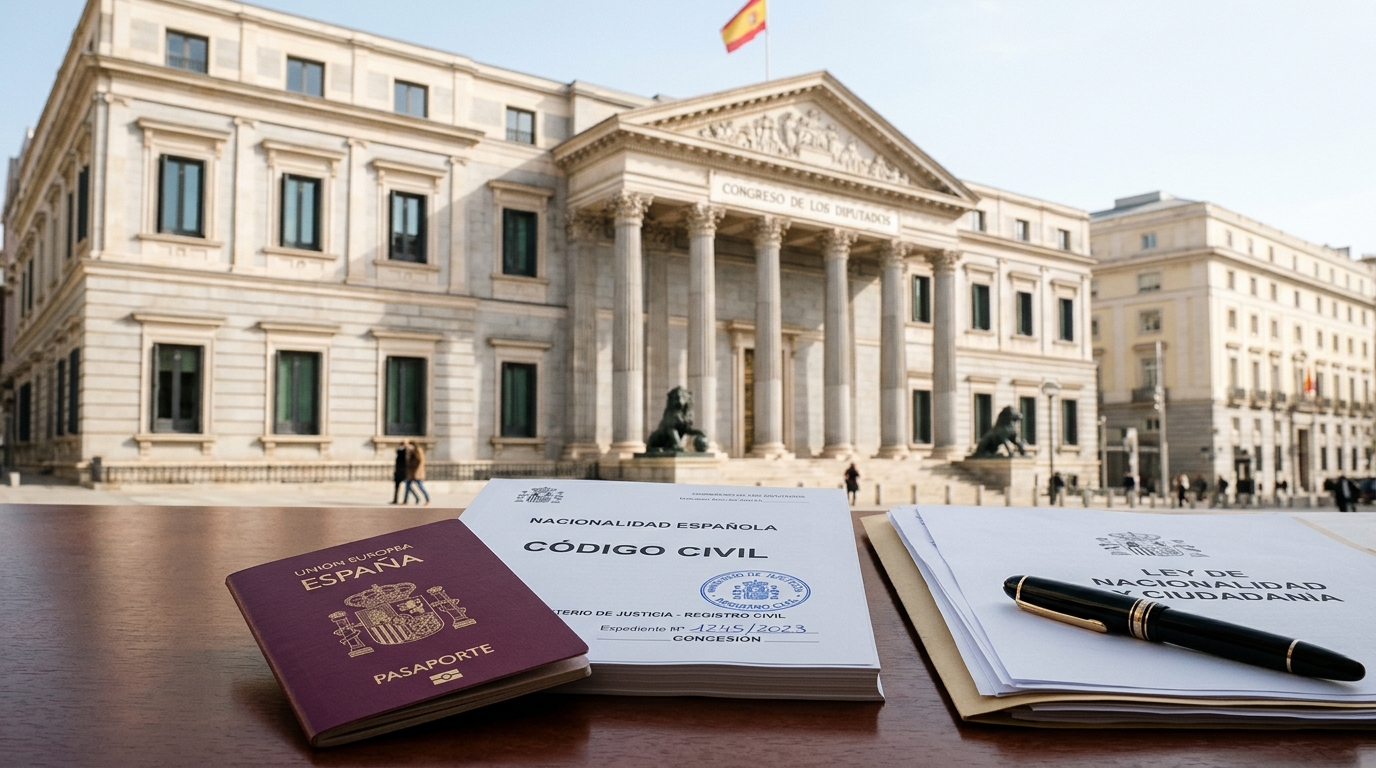
1. What the PP Proposes: Carving Nationality Out of the Spanish Civil Code
Currently, the acquisition of Spanish nationality is regulated under the Spanish Civil Code (Código Civil), specifically within Articles 17 through 28, governing citizenship by origin, residence (Nacionalidad por Residencia), option, and naturalization charter (Carta de Naturaleza).
The core of the PP's proposal is to completely extract citizenship regulations from the Civil Code and enact a dedicated, comprehensive Spanish Nationality Law (Ley de Nacionalidad). This autonomous framework would unilaterally:
• Standardize and tighten eligibility criteria across all nationality acquisition tracks.
• Introduce stricter conditions under which citizenship can be forfeited or revoked (Pérdida de Nacionalidad).
• Overhaul the administrative procedural mechanics to impose higher scrutiny on applicants.
2. Anticipated Tightened Requirements for the Spanish Passport
While full legislative text will only emerge if the PP forms a government, their leadership outlined key areas slated for heightened restrictions:
1. Enhanced Civic & Language Integration Tests:
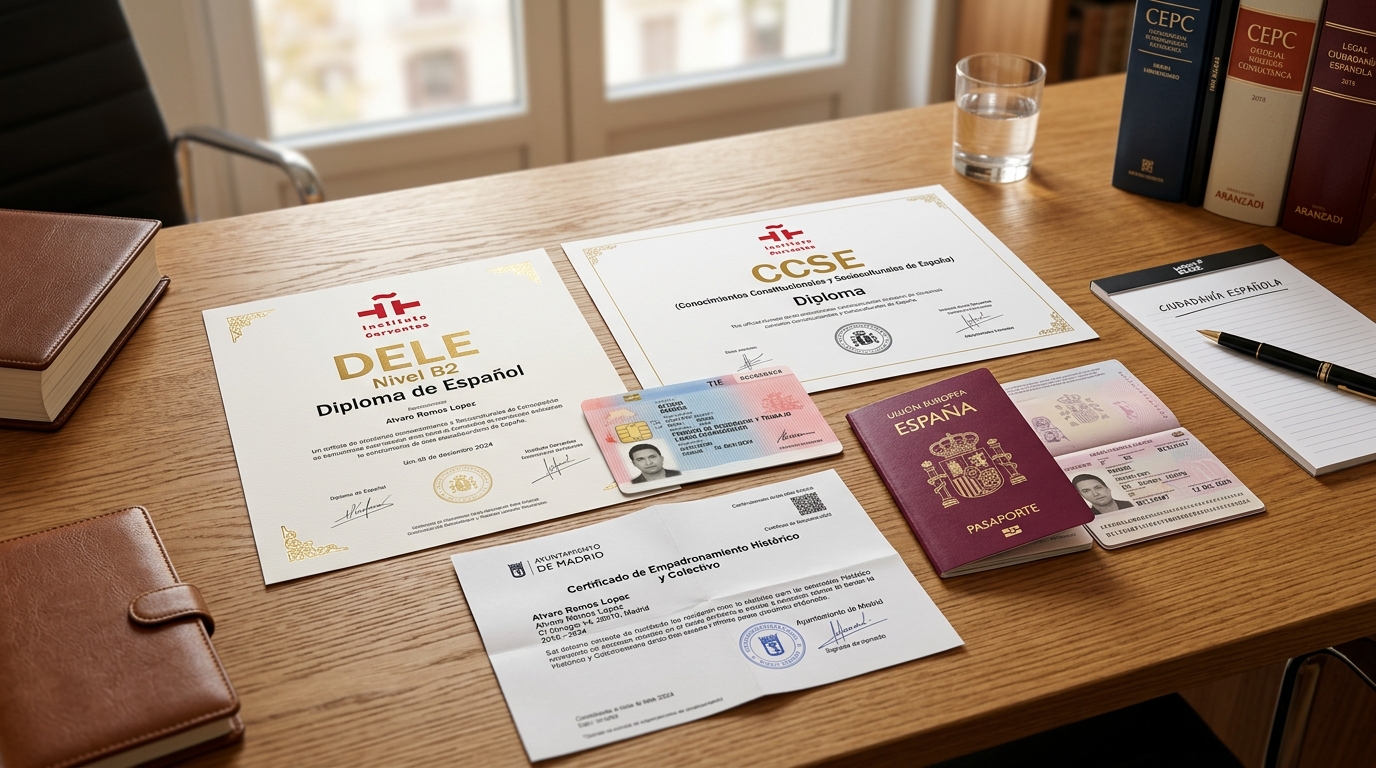
The current requirement involves passing the CCSE (constitutional and sociocultural knowledge) and DELE A2 (Spanish language) exams administered by the Instituto Cervantes. Under the proposed law, language proficiency thresholds could rise from beginner A2 to intermediate B1/B2, alongside more rigorous cultural integration vetting.
2. Strict Financial Independence & Social Security Metrics:
The reform aims to mandate demonstrated sustained employment, tax compliance, and proof of personal financial independence, minimizing access to citizenship for individuals reliant on public subsidies or minimal contributions.
3. In-Depth Criminal & Civil Background Scrutiny:
Stricter background checks covering both clean criminal records in Spain and comprehensive verification of civil conduct records from countries of origin.
!Required Cervantes Diplomas CCSE, DELE and Residency Documents for Spanish Nationality
3. Is the Proposal in Effect Today? Political Campaign vs. Enacted Law
The proposal has zero current legal force. The Partido Popular is currently in opposition, and passing an autonomous nationality law requires:
1. Winning a parliamentary majority in future general elections.
2. Drafting a formal bill (Proyecto de Ley) and steering it through the Congress of Deputies and the Senate.
3. Official ratification and publication in the Official State Gazette (BOE).
For applicants today, the legal landscape remains completely unchanged: all standard criteria, residency durations, and electronic filing routes via the Ministry of Justice (Ministerio de Justicia) continue to operate normally.
4. Current Legal Pathways: Spanish Citizenship by Residency
Foreign residents continue to qualify under the standard statutory residency thresholds of Article 22 of the Civil Code:
• 10 years: Standard general residency rule for most foreign nationals.
• 5 years: Recognized refugees and beneficiaries of international protection.
• 2 years: Citizens of Ibero-American countries, Andorra, the Philippines, Equatorial Guinea, Portugal, and persons of Sephardic origin.
• 1 year: Foreign spouses married to Spanish citizens, or children born on Spanish soil.
💡 Legal Insight from CrossWorld:
A fundamental constitutional principle of Spanish administrative law is the non-retroactivity of restrictive laws (Irretroactividad de las disposiciones sancionadoras o restrictivas). Any future restrictive law passed by a new parliament will strictly govern new applications, leaving files officially registered and assigned an expediente number under existing rules intact. If you meet the current legal requirements, postponing your application is an unnecessary strategic risk.
Frequently Asked Questions (FAQs)
Q: Does the PP's political announcement affect pending Spanish citizenship applications?
A: No, not at all. Applications currently submitted and under processing are evaluated strictly under the laws in force at the time of submission and are entirely unaffected by opposition proposals.
Q: Will the 2-year expedited citizenship rule for Latin American nationals be abolished?
A: Abolishing the 2-year preferential timeline for Latin American nationals has not been proposed, as it is anchored in historical bilateral agreements. However, additional integration and financial proofs may be introduced around it.
Q: What essential documents are required to file for citizenship under current rules?
A: Original legalized and apostilled birth certificate (translated by a sworn translator), legalized and translated police clearance certificate from your home country, historic municipal registration (Padrón histórico), valid TIE residency card, and Instituto Cervantes exam certificates (CCSE & DELE).